In Brief: Knowing how to hydrate your voice properly is the single most important thing you can do as a professional speaker — but most people are doing it wrong. Drinking water helps, but the timing, what you drink, your environment, and even your medications all affect how hydrated your vocal cords actually are. Here’s what the clinical evidence says, and what I actually recommend to my clients.
How to Hydrate Your Voice: What Actually Works for Professional Speakers
About the Author

Tatiana Dunnett (CCC-SLP)
Your Speech Pathologist
A Florida-licensed, ASHA-certified speech-language pathologist offering telehealth speech therapy for adults across Florida — voice therapy, accent modification, stuttering, and aphasia support. Learn more about me.
How to Hydrate Your Voice: Why It’s Is More Complicated Than “Just Drink More Water”
Your vocal cords are covered by a thin layer of mucus that keeps them lubricated as they vibrate. When that layer dries out — even slightly — your voice becomes harder to produce, more prone to strain, and more vulnerable to damage under heavy use.
The vocal folds rely on adequate whole-body hydration to maintain the thin layer of fluid that allows them to vibrate efficiently. Because systemic hydration takes time to affect vocal fold tissues, drinking water immediately before speaking does not instantly improve vocal fold lubrication. That lag is what catches professional speakers off guard. You feel fine. You drank water this morning. But your vocal cords are running dry.
There are two kinds of vocal hydration: systemic hydration (what you drink) and surface hydration (the moisture in the air around you). Both matter. Focusing on only one is why most hydration advice for speakers falls short.
How to Hydrate Your Voice: The Clinical Basics
Water — Timing Matters More Than Amount
The standard recommendation is 8 glasses (64 oz) of water per day, but the more important principle is to aim for consistent hydration throughout the day based on your body’s needs rather than trying to hit a universal water target.
Drinking a large amount of water right before a presentation won’t hydrate your vocal cords in time. Your body needs several hours to process water and deliver it to the tissues of your larynx. If you’re presenting at 2pm, what you drink at 8am matters more than what you drink at 1pm.
What I recommend to my clients: Start hydrating the day before any significant vocal commitment. Sip water consistently throughout the day rather than drinking large amounts infrequently. Room temperature or slightly warm water is easier on the vocal tract than ice cold water, which can cause the muscles around your larynx to tighten.
Electrolytes — The Hydration Multiplier
Water alone isn’t always enough — especially for speakers in Florida’s heat and air conditioning. Electrolytes help your body actually absorb and retain the water you drink rather than passing it through quickly.
What actually works:
- Lemon water — Lemon water can make plain water more appealing, helping some people drink more consistently.
- Coconut water — natural electrolytes without the sugar load of sports drinks
- Water with a pinch of salt (not iodized table salt) — If you’ve been sweating heavily or exercising, beverages containing electrolytes may help replace fluid losses
What doesn’t work as well:
- Heavily marketed sports drinks — typically too high in sugar and sodium for daily vocal health use
- Flavored waters with artificial sweeteners — some sweeteners have a drying effect on mucous membranes
The 1:2 Rule for Caffeine and Alcohol
Both caffeine and alcohol are diuretics — they can cause your body to lose more water than you take in. Neither has to be eliminated entirely, but if you’re consuming either and experiencing recurring voice problems, the dehydrating effect compounds over time.
Moderate caffeine consumption is unlikely to cause dehydration if you’re otherwise well hydrated. However, caffeine may contribute to dryness or reflux symptoms in some individuals, so pay attention to how your own voice responds.
The 1:2 rule: for every cup of coffee or glass of alcohol, follow up with two cups of water. It’s a simple habit that largely offsets the diuretic effect without requiring you to give up your morning coffee or post-event drink.
If you have a significant vocal commitment — a keynote, a full day of training, an important presentation — I’d recommend holding off on caffeine and alcohol until after you’ve delivered.
Surface Hydration: The Part Most Speakers Miss

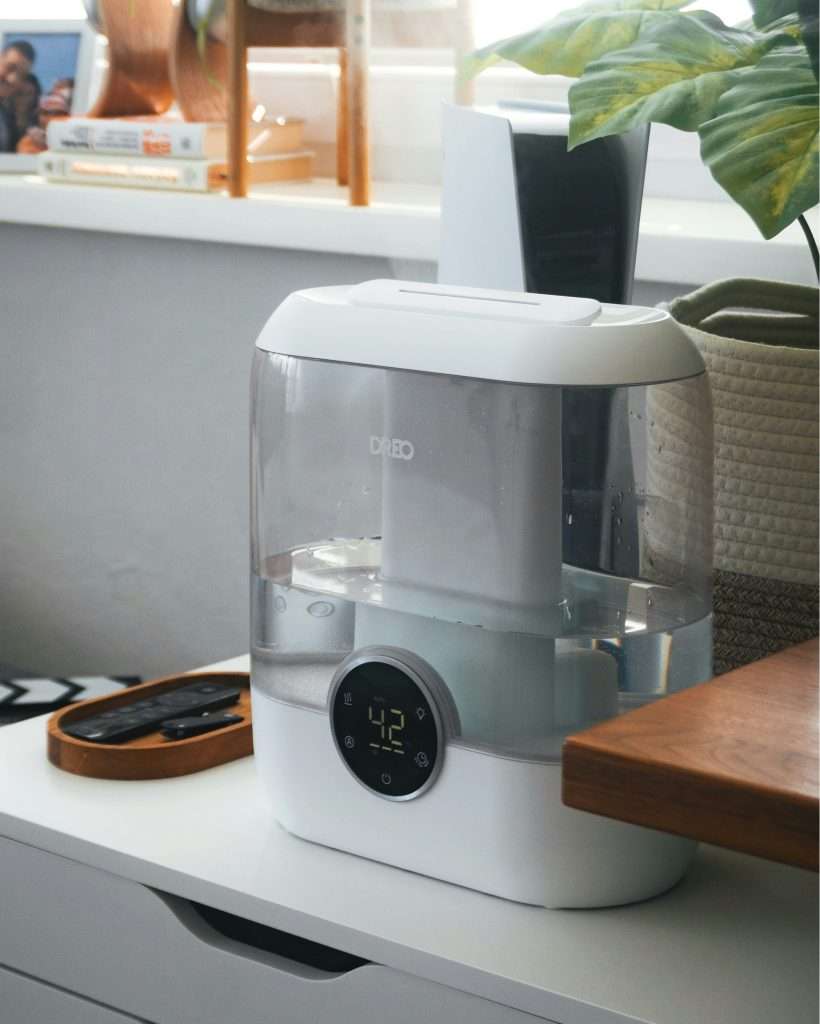
When it comes to how to hydrate your voice, systemic hydration gets all the attention, but surface hydration — the moisture in the air immediately around your vocal cords — is equally important and largely overlooked.
Humidifiers
In Florida, nearly everyone is in heavily air-conditioned environments year-round. Air conditioning strips humidity from the air aggressively. The result is that your vocal cords are in a drying environment for most of your waking hours, regardless of how much water you drink.
A cool mist humidifier in your bedroom overnight is one of the highest-impact, lowest-effort changes a professional voice user can make. Aim for around 30% to 40% humidity. ENT recommendations fall in the higher range of 40%-60%. Your vocal cords do significant repair work overnight — giving them a humid environment to do that work in makes a measurable difference.
Personal steam inhalation — breathing steam directly from a bowl of hot water or a personal steam inhaler — provides direct surface hydration to the vocal tract. This is different from drinking water. Five to ten minutes of steam inhalation before a heavy vocal day can be a useful addition to your routine, particularly if your voice feels dry or tight. Use warm—not boiling—steam to avoid burns.
Avoid Competing With Dry Air
Open offices, conference rooms, airplanes, and hotel rooms all tend to have very dry air. When you’re speaking in these environments, you’re losing surface moisture faster than usual. If you have control over the environment — in your own office, for example — running a humidifier matters.
The other thing to watch: Hotel lobbies, conference venues, and some offices often use signature scents: synthetic fragrances that can irritate the vocal tract and dry out mucous membranes. If you’re presenting in a heavily scented environment, arrive early enough to assess the air quality and position yourself away from diffusers or vents. If possible, ask an event organizer ahead of time to have portable air purifiers running in the space to give you the best air for speaking, request a fragrance-free room, or ask that diffusers be turned off before your presentation.
What Dries Your Voice That You Might Not Expect
Medications
Some of the most commonly used medications have a significant drying effect on the mucous membranes, including the vocal cords:
- Antihistamines — especially older first-generation antihistamines like diphenhydramine (Benadryl). Many allergy medications have this effect.
- Decongestants — pseudoephedrine and similar compounds dry out the entire upper respiratory tract.
- Certain blood pressure medications — particularly ACE inhibitors, which can also cause a chronic dry cough that further irritates the vocal cords.
- Some antidepressants — several classes have anticholinergic effects that dry mucous membranes.
If you rely on any of these and notice voice dryness or fatigue, it’s worth raising with your doctor. There are often alternatives with less drying effect. I can’t prescribe or recommend specific medications — but I can tell you that this is one of the most commonly overlooked causes of persistent voice problems in professional voice users.
Throat Lozenges — Choose Carefully
Many throat lozenges marketed for voice users actually have a drying effect. Menthol lozenges — the most common kind — create a sensation of coolness that many people interpret as soothing, but menthol is a mild drying agent and the sensation of relief isn’t the same as actual hydration.
What to look for instead: Glycerin-based lozenges, pectin-based lozenges, or lozenges with slippery elm bark, which has a genuinely soothing and lubricating effect on the throat.
Dairy Before Performance
Milk, cream, cheese, and ice cream can temporarily increase mucus production for some people, which creates that urge to clear the throat. For professional speakers, this matters most in the hours before a significant vocal commitment. If you notice this pattern, avoid dairy for two to three hours before you need your voice to perform.
Mouth Breathing
One of the biggest causes of vocal dryness is mouth breathing. Breathing primarily through your nose helps humidify and warm the air before it reaches your vocal tract. Mouth breathing—especially during sleep or exercise—can dry the vocal folds more quickly.
Acid Reflux
Even silent reflux can mimic dehydration. If your voice is consistently dry despite good hydration, frequent throat clearing, hoarseness, chronic coughing, or a sensation of a lump in the throat may point to laryngopharyngeal reflux (LPR). An evaluation by an ENT or speech-language pathologist can help determine the underlying cause.
A Simple Vocal Hydration Routine for Professional Speakers
The night before:
- Run a cool mist humidifier in your bedroom
- Drink at least 2 extra glasses of water in the evening
- Avoid alcohol
Morning of:
- Start with warm water with lemon before coffee
- Apply the 1:2 rule if you have caffeine
Consider 5-10 minutes of personal steam inhalation if your voice feels tight
Throughout the day:
- Sip water consistently — don’t wait until you’re thirsty
- Carry a water bottle everywhere
- Avoid throat clearing — swallow or sip instead
Before your presentation or heavy vocal use:
- Sip room temperature water
- Do a gentle vocal warmup
- Avoid ice cold drinks immediately beforehand
Frequently Asked Questions About Vocal Hydration
What is the best method to hydrate your throat for professional speakers?
The most effective approach combines systemic and surface hydration. Drink water consistently throughout the day — starting the day before any heavy vocal commitment, not just the morning of. Add electrolytes to support absorption. Run a cool mist humidifier in your bedroom overnight. Avoid antihistamines, menthol lozenges, and large amounts of caffeine or alcohol in the hours before significant voice use. For persistent dryness despite good hydration habits, a consultation with a speech-language pathologist can identify other contributing factors.
Does drinking water immediately before speaking help your voice?
Not significantly. It takes several hours for water you drink to reach and hydrate your vocal cord tissue. Sipping water just before speaking can soothe surface irritation and keep your mouth from drying out, but it won’t hydrate your vocal cords in time. The hydration that matters for a 2pm presentation happened at 8am — or the night before.
Is coconut water good for your voice?
Yes — coconut water is one of the better hydration choices for professional voice users. It contains natural electrolytes (potassium, sodium, magnesium) that help your body absorb and retain water, without the high sugar and sodium content of most sports drinks. It’s not magic, but as part of a consistent hydration routine it’s a genuinely useful addition.
Does steam inhalation help your voice?
Yes, for surface hydration specifically. Breathing steam directly — from a bowl of hot water, a personal steam inhaler, or even a hot shower — delivers moisture directly to the surface of your vocal tract. This is different from drinking water, which takes hours to reach your vocal cords through your bloodstream. Five to ten minutes of steam inhalation before heavy voice use can provide meaningful surface hydration, particularly in dry environments.
Can dehydration cause a hoarse voice?
Yes. Dehydration reduces the thin mucus layer that lubricates your vocal cords as they vibrate. Without adequate lubrication, your vocal cords produce more friction, which leads to hoarseness, fatigue, and over time, increased risk of strain or injury. In professional voice users, chronic mild dehydration is one of the most common and most treatable contributors to recurring hoarseness.
Is menthol bad for your voice?
Yes — despite the sensation of relief it provides, menthol has a mild drying effect on the mucous membranes. Menthol lozenges are one of the most commonly used and least helpful products for voice care. Look for glycerin-based lozenges or those containing slippery elm bark instead.
How much water should a professional speaker drink?
At minimum, 64 oz (8 glasses) per day as a baseline. Professional voice users who speak for extended periods, are in air-conditioned or heated environments, or exercise regularly likely need more. The more useful measure than a specific number is consistency — sipping water throughout the day maintains hydration more effectively than drinking large amounts infrequently.
When Hydration Alone Isn’t Enough
Good hydration practice goes a long way — but if you’re experiencing persistent hoarseness, voice fatigue that doesn’t resolve with rest and hydration, or a voice that keeps giving out despite following all of the above, hydration alone isn’t the answer. There may be structural issues, muscle tension patterns, or underlying conditions that need clinical assessment.
As a Florida-licensed SLP, I work with professional speakers, executives, educators, and performers throughout Florida via telehealth. If your voice isn’t performing the way it should, a free 30-minute consultation is a good place to start.
Book your Free Consultation
Enter your email and I’ll send you a booking link right away.
Florida residents only · Privacy policy · Telehealth only · No spam, ever