In brief: Tatiana Dunnett (Tanya Harmer CCC-SLP) is a Florida-licensed, ASHA-certified speech-language pathologist offering Parkinson’s voice therapy in Florida via secure telehealth. Drawing on graduate research conducted at East Stroudsburg University, Tatiana integrates music, rhythm, and familiar songs into evidence-informed speech therapy to support vocal volume, intelligibility, pacing, and cognitive engagement. Available to adults throughout Florida. Individual sessions available now; group sessions by arrangement.
Speech Therapy for Parkinson’s in Florida | A Singing-Based Approach
About the Author
Tatiana Dunnett (CCC-SLP)
Your Speech Pathologist
A Florida-licensed, ASHA-certified speech-language pathologist offering telehealth speech therapy for adults across Florida — voice therapy, accent modification, stuttering, and aphasia support. Learn more about me.
Voice Therapy for Parkinson Disease in Florida: A Singing-Based Approach
If you or someone you love has Parkinson’s disease, you may already know that the voice is one of the first things to change. Speech becomes softer, flatter, and harder to understand. Words come out rushed or trailing off. The effort of being heard in a conversation — at dinner, on the phone, in a doctor’s office — starts to feel exhausting.
Traditional speech therapy for Parkinson’s addresses these challenges directly. But there’s a growing body of evidence suggesting that when speech therapy techniques are embedded in music and rhythm — familiar melodies, structured singing exercises, songs that matter to the person — the outcomes can be more engaging, more motivating, and clinically meaningful in ways that extend beyond the voice itself.
That’s the foundation of Tatiana’s approach to voice therapy for Parkinson disease in Florida.
The Research Behind the Approach
Tatiana’s work in this area is grounded in graduate research she conducted at East Stroudsburg University, where she studied the outcomes of singing-based speech therapy with Parkinson’s patients across early to advanced stages of the disease.
The study compared two groups: one receiving traditional articulation and memory-based speech therapy activities, and one receiving the same therapeutic content embedded in music — rhythm, melody, and familiar songs ranging from nursery rhymes to Frank Sinatra and Ella Fitzgerald. Vocal measurements were taken weekly across eight sessions using standardized clinical tools including the CAPE-V (Consensus Auditory-Perceptual Evaluation of Voice), the Voice Handicap Index (VHI), the Cognitive Linguistic Quick Test (CLQT), and VisiPitch acoustic analysis.
While the sample size was small and results were statistically inconclusive — a larger study would be needed to draw firm clinical conclusions — the patient-reported outcomes were consistently meaningful. Every participant reported:
- Personally perceived improvement in voice use and confidence
- Increased vocal amplitude (loudness)
- More appropriate pacing of speech
- Deep appreciation for the social connection of group therapy
- Genuine enjoyment of participating in music-based activities
The patients who sang their therapy didn’t just measure slightly better — they showed up more, engaged more, and left sessions feeling better. For a condition that can isolate and discourage, that matters as much as the clinical measurements.
What Singing Therapy for Parkinson’s Actually Looks Like
Tatiana’s approach integrates traditional speech-language pathology techniques with music and rhythm. Sessions are not music lessons — they are clinical speech therapy sessions where the vehicle for the work is song.
A typical session might include:
- Unison singing of familiar songs to support breath support, volume, and pacing
- Articulation exercises set to rhythm and melody to improve speech clarity
- Familiar songs chosen for the individual patient — music that carries personal meaning activates memory and engagement differently than neutral exercises
- Targeted vocal exercises embedded in musical phrases to work on specific areas like pitch range, loudness, or intelligibility
The clinical goals — improving vocal volume, intelligibility, breath support, and pacing — are the same as in traditional Parkinson’s speech therapy. The method of reaching those goals is different, and for many patients, more sustainable.
Why This Works: The Neuroscience of Music and the Parkinson’s Brain
Music engages the brain differently than speech. Rhythm activates motor pathways that Parkinson’s disease affects, providing an external timing cue that can help regulate movement — including the fine motor movements of speech. Familiar songs access long-term memory networks that often remain more intact than other cognitive functions in Parkinson’s patients. And singing in a group — or even with a therapist on a video call — activates social and emotional circuits that pure drill-based therapy does not.
This is consistent with broader research in neurologic music therapy and rhythmic auditory stimulation, which ASHA recognizes as an evidence-based area of practice for neurological populations.
Who This Is For
Voice therapy for Parkinson disease may be right for you or your loved one if:
- You have been diagnosed with Parkinson’s disease and have noticed changes in your voice — softer, flatter, harder to understand
- You are in the early stages of Parkinson’s and want to be proactive about protecting your voice before changes become more pronounced
- You have tried traditional speech therapy and found it hard to stay motivated or consistent
- You enjoy music and want a therapy approach that feels less clinical and more human
- You are a caregiver, family member, or healthcare provider looking for a specialized telehealth option for someone with Parkinson’s in Florida
Why Telehealth Works for Parkinson’s Voice Therapy
Getting to a clinic is one of the biggest barriers for people with Parkinson’s. Driving becomes difficult. Fatigue is real. The logistics of an in-person appointment can be exhausting before the session even starts.
Telehealth removes all of that. Sessions happen over secure video, on your schedule, from your home or a caregiver’s home. ASHA has recognized telepractice as an appropriate service delivery model for SLPs — including for neurological populations — since 2005.
For singing therapy specifically, the home environment has an additional advantage: patients are more relaxed, more comfortable, and more likely to engage authentically with the musical elements of the session than they might be in a clinical setting.
Individual and Group Sessions
Tatiana offers individual singing therapy for Parkinson’s sessions via telehealth throughout Florida. Group sessions — which replicate the social and community dimension that participants in Tatiana’s research found so meaningful — are available by arrangement. If you are interested in a group format for yourself, a loved one, or a Parkinson’s support community, please mention this when you book your consultation.
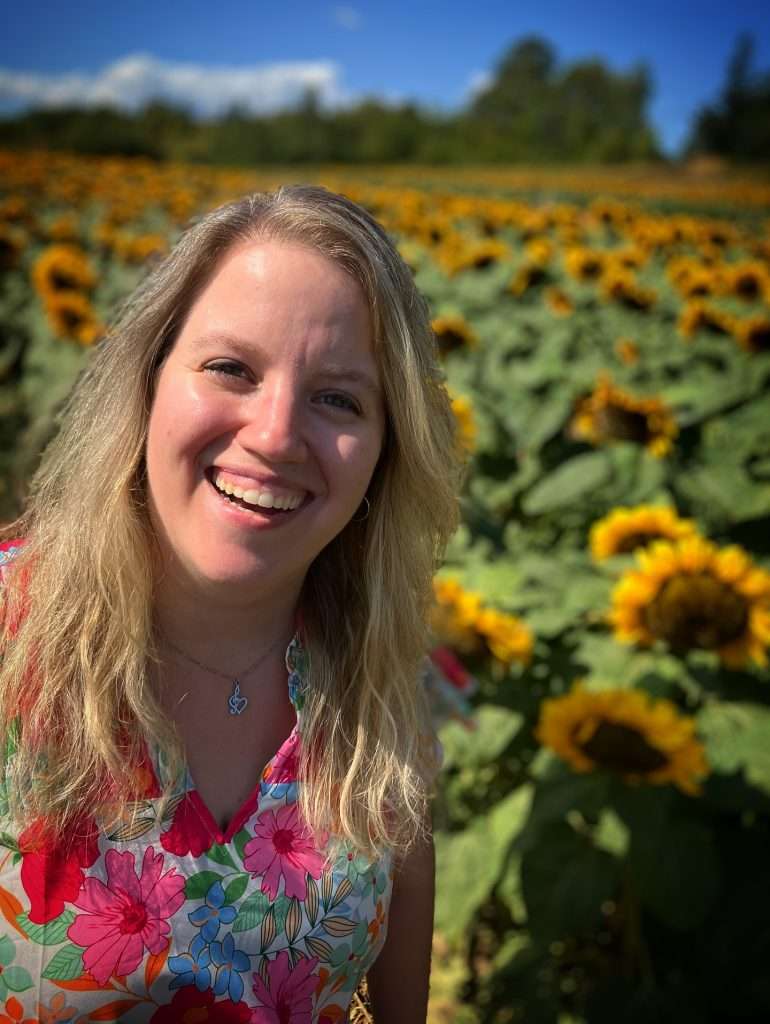
About Tatiana
Tatiana Dunnett (Tanya Harmer CCC-SLP) is a Florida-licensed, ASHA-certified speech-language pathologist and the founder of Speak for Joy. She holds a Master of Science in Speech-Language Pathology from East Stroudsburg University, where her graduate research focused on singing-based therapy approaches for Parkinson’s patients. Before becoming an SLP, she spent nine years in classical vocal training — giving her a dual clinical and musical lens that informs everything she does with voice.
Speak for Joy is a private pay telehealth practice serving adults throughout Florida. Some clients use HSA or FSA funds. Fees are listed on the fees page.
Book your Free Consultation
Enter your email and I’ll send you a booking link right away.
Florida residents only · Privacy policy · Telehealth only · No spam, ever
Frequently Asked Questions
Is singing therapy for Parkinson’s evidence-based?
Singing-based and music-integrated approaches to Parkinson’s speech therapy are supported by a growing body of research in neurologic music therapy and rhythmic auditory stimulation. Tatiana’s own graduate research at East Stroudsburg University found that patients who received speech therapy embedded in music and rhythm reported meaningful improvements in vocal confidence, amplitude, and pacing — as well as significantly higher enjoyment and engagement than those receiving traditional therapy alone. As with all emerging approaches, larger studies are needed to establish definitive clinical conclusions.
Does someone need to be able to sing to benefit from this therapy?
No. Singing therapy for Parkinson’s is not about vocal performance. It is about using the structure of music — rhythm, melody, familiar songs — as a vehicle for clinical speech therapy goals. Patients do not need any musical background or ability. The music is a tool, not a talent requirement.
What stage of Parkinson’s is this approach appropriate for?
Tatiana’s research included patients from early onset to more advanced stages of Parkinson’s disease, and meaningful improvements were reported across the range. Early intervention is particularly valuable — starting voice therapy before changes become pronounced gives patients more to work with and more to protect. But it is never too late to begin.
Can singing therapy for Parkinson’s be done via telehealth?
Yes. Tatiana offers voice therapy for Parkinson disease exclusively via secure telehealth throughout Florida. The home environment is often more conducive to this kind of therapy — patients are relaxed, in a familiar space, and more willing to engage with the musical elements of sessions than they might be in a clinic. Individual sessions are available now; group sessions are available by arrangement.
Is this available for Parkinson’s patients outside of Florida?
Tatiana is currently licensed in Florida only and can serve Florida residents aged 18 and older. If you are outside Florida, please join the waitlist for when services expand to your state.
How do I get started?
Book a free 30-minute consultation directly on the Book Now page. Bring your questions, your goals, and whatever you’ve been holding back from saying. Tatiana will help you figure out whether this approach is the right fit — for you or for the person you’re caring for.